
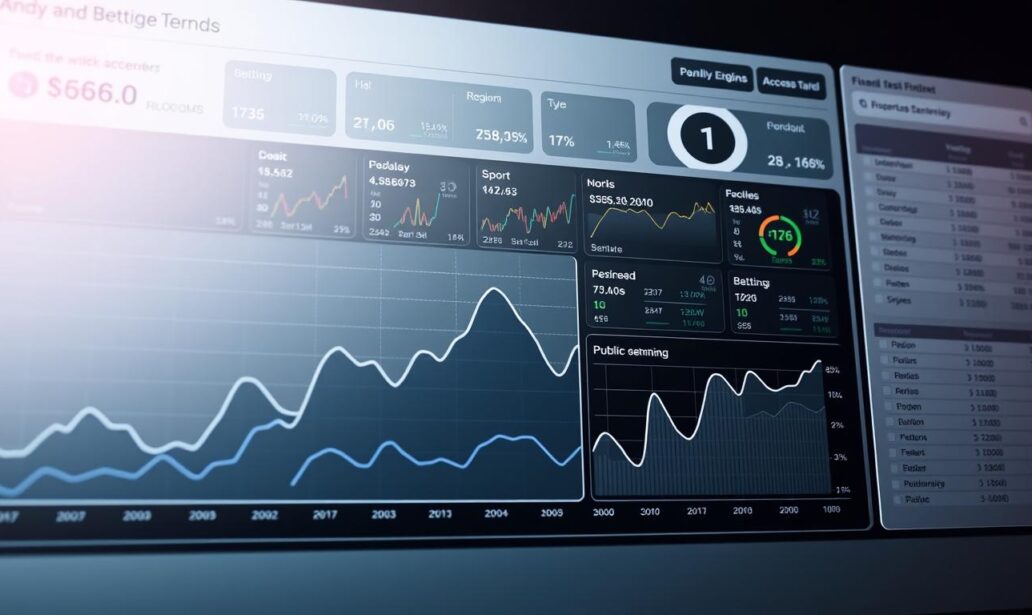
Ever wonder why so many people bet the same way? It’s all about public betting trends. Here, many follow the crowd, ignoring the odds.
I’ve seen many bettors follow the crowd, only to find the real value elsewhere. This group thinking can help smart bettors make money.
Sportsbooks change their odds based on what most people think. Knowing this can give you an edge. The public isn’t always correct, which is surprising.
Their emotions and what the media says can lead to big opportunities. Let’s explore the psychology behind these trends.
Identifying Opportunities
Public betting trends don’t create value – they reveal where value hides in plain sight. Think of it as financial markets during a bubble. Everyone’s buying Tesla stock at peak valuation, while smart money quietly accumulates undervalued opportunities.
Contrarian betting isn’t about rebellion. It’s about recognizing when consensus becomes collective delusion. When 80% of money flows toward the Cowboys because they’re “America’s Team,” you’re witnessing crowd psychology overriding statistical reality.
Timing matters more than people realize. Star player injuries create immediate overreactions – lines move beyond rational limits within hours. That’s when value emerges like ripe fruit waiting to be picked.

Media narratives fuel these distortions. ESPN highlights create betting bubbles that pop faster than Bitcoin in a bear market. The trick isn’t predicting the pop – it’s recognizing the bubble.
Holiday games reveal this perfectly. Thanksgiving matchups see casual bettors overwhelm markets with emotional wagers. Prime-time games become popularity contests, not probability assessments.
The mathematical edge appears when public sentiment creates odds that defy reality. It’s not about being contrary for contrary’s sake – it’s about recognizing emotional betting patterns that create value opportunities.
| Public Betting Pattern | Sharp Response | Value Opportunity Window |
|---|---|---|
| 80%+ on popular favorites | Contrarian position on underdogs | 24-48 hours before game time |
| Overreaction to player injuries | Buying inflated underdog lines | First 2 hours after news breaks |
| Holiday game sentiment betting | Fading public emotional plays | During peak betting volume periods |
| Prime-time popularity inflation | Value hunting on overlooked teams | When line moves 3+ points from open |
This approach transforms betting from guessing to calculated positioning. You’re not betting against the public – you’re betting against emotional decision-making.
The best opportunities emerge when crowd psychology creates clear mathematical edges. It’s the difference between following trends and spotting them before they reverse.
Remember: markets correct. Emotional betting creates temporary distortions. Your job isn’t to predict outcomes – it’s to identify when probability and perception diverge.
That divergence is where profit lives. It’s the sweet spot between what people feel and what numbers show. Master this, and you’re not just betting – you’re investing in mispriced opportunities.
Analysis Tools
Imagine betting without the right tools, like watching Game of Thrones through a potato. You’ll miss all the important details. The right tools turn you into a strategic bettor, giving you betting insights that help you win.
Amateurs bet based on team percentages, while pros look at money percentages. If 70% of tickets bet on one team but 60% of money bets on the other, you’ve found a “sharp money signal.” It’s like seeing everyone buy Beanie Babies while Warren Buffett buys Berkshire Hathaway stock.
Line movement analysis is like having a crystal ball. A point spread doesn’t jump two points for no reason. It moves because smart money is speaking up, making books nervous.
Premium services like Action Network or Sports Insights give you real-time data. Free resources like BetMGM’s social feeds also offer valuable insights. The goal is to understand which metrics predict outcomes, not to spend the most.
Here’s your toolkit breakdown:
- Aggregate tracking sites: Show data across sportsbooks, revealing consensus percentages
- Line movement monitors: Track spread changes from opening to game time
- Social sentiment analyzers: Measure public enthusiasm against smart money positioning
Sportsbooks aim to balance action, not predict winners. When they move lines against public sentiment, they’re showing they’re scared of smart money. That’s your chance to win.
The best betting insights come from combining different data sources. It’s not about finding one magic number. It’s about spotting where public opinion and money go different ways. When they do, you’ve found your edge.
Think of yourself as a financial analyst, not a gambler. The tools are there to help you make informed bets. Your job is to understand the numbers.
Historical Examples
Let’s look at the graveyard of public betting disasters. These stories are not just warnings. They show how public betting trends can lead to great opportunities for those who think differently.
Remember Super Bowl XLII? The Patriots were 12-point favorites with 85% of the public betting on them. The media thought they were unbeatable after a perfect season. But, smart money saw the Giants’ strong pass rush could stop Brady’s offense.

The Giants won 17-14, making bookmakers happy while the public lost. This game shows how public opinion can create value on the other side.
Thanksgiving games are also interesting. Dallas Cowboys games often get too much attention, making lines too high. In 2019, Dallas was 7-point favorites against Buffalo with 78% of bets.
Buffalo won 26-15, helping sharp bettors who saw the line was too high. People remembered Dallas’s offense but forgot Buffalo’s strong defense.
Prime-time over/unders also offer good chances to bet against the public. The 2018 Rams-Vikings game had 83% of bets on the over (48.5 points). People thought it would be a high-scoring game, ignoring Minnesota’s defense and travel issues.
The game ended 38-31 Rams, but the under hit because the total was 69 points? No, it was actually a defensive game with the Rams winning 24-7.
These examples show a few things:
- Media stories can be wrong
- Recent events can cloud judgment
- Volume can move lines, not facts
- Going against the crowd can be smart
Playoff games also show how public memory can be short. People often bet based on recent games, ignoring trends and specific matchups. The 2020 Packers-Titans game had 72% of bets on Green Bay, despite Tennessee’s ability to control the game.
Tennessee won 40-14, showing the public bet based on Rodgers’ past performances, not Tennessee’s strengths.
Each example shows how public betting trends can lead to market inefficiencies. It’s not just about betting against the public. It’s about knowing when public opinion is wrong. These lessons help find similar chances today.
Smart bettors don’t just follow trends. They understand why trends happen and when they’re wrong. That’s the difference between gambling and investing.
Realizing Strategic Advantages
Think of contrarian betting as playing chess while everyone else plays checkers. It’s not just about betting against teams. It’s about betting against human nature itself. When you mix crowd psychology with statistics, you get a unique advantage.
Smart money management is key. Even the best betting insights won’t help if you bet recklessly. Sometimes, the public actually makes the right call. The goal is to know when the crowd is the smart money.
Build your own betting framework. Trust sharp signals and weigh public data against other factors. Bet against popular opinion when the numbers support it. This way, you turn sports betting into a game of strategy and psychology.